
Search Massachusetts Criminal Records
Massachusetts criminal records are tracked through the CORI system, which stands for Criminal Offender Record Information. The state Department of Criminal Justice Information Services manages this database. You can search criminal records online through the iCORI portal, look up court case information through the Massachusetts Trial Court system, or visit a courthouse in any of the 14 counties. This page covers what these records include, how to find them, and where to go for more detail.
Massachusetts Criminal Records Overview
What Are Massachusetts Criminal Records
CORI is the term Massachusetts uses for its official criminal record system. It stands for Criminal Offender Record Information and is defined under MGL c. 6, Section 167. The Department of Criminal Justice Information Services, known as DCJIS, maintains this database for the state. Their office is located at 200 Arlington Street, Suite 2200, Chelsea, MA 02150. You can reach them by phone at (617) 660-4640 or by email at iCORI.INFO@state.ma.us. The DCJIS homepage has full details on all their record check services.
Not every arrest creates a criminal record in Massachusetts. If someone is arrested but never arraigned in court, nothing gets added to the CORI system. The record starts at arraignment.
A CORI file covers all charges on which a person has been arraigned in Massachusetts state court. It includes the dates of arraignment, when charges were resolved, and any sentences imposed. Pending charges always appear. Misdemeanor convictions stay on record for five years from disposition or release. Felony convictions stay for ten years. Murder, manslaughter, and sex offense convictions appear with no time limit. Some things are left out entirely. Restraining orders do not appear unless violated. Records from other states or federal courts are not in CORI. Juvenile records are generally excluded, except in youthful offender cases. Arrests without arraignment also do not appear. This means a CORI check only covers Massachusetts state court activity, not a person's full national history.
The DCJIS offers several types of access depending on who is requesting. Standard access covers pending charges and recent convictions. Certain organizations that work with children or vulnerable adults can request additional information. The Massachusetts CORI information page explains each access level and what it covers.
The Massachusetts CORI information page at mass.gov gives a full overview of the system and how to request records.
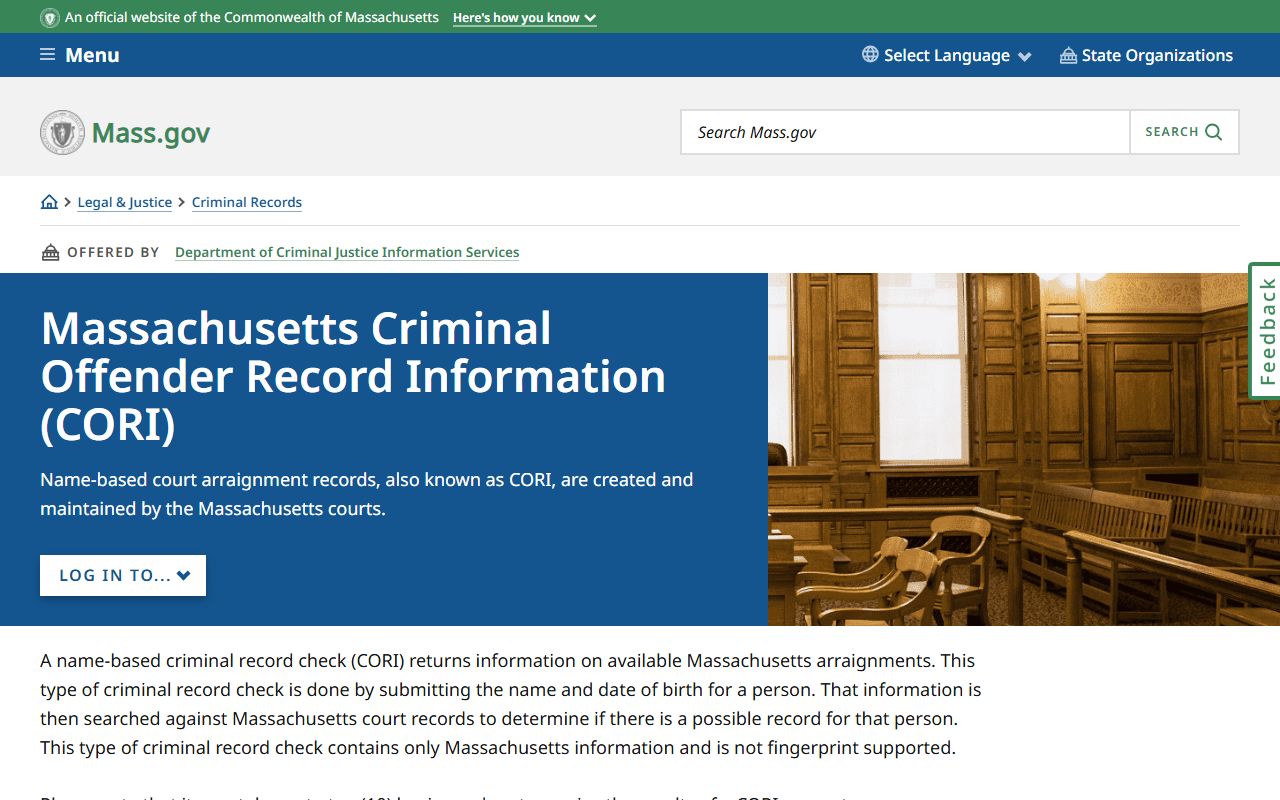
This page covers who can access CORI, what the fees are, and how to correct errors in your record.
How to Search Criminal Records in Massachusetts
There are a few ways to look up criminal records in Massachusetts. Online is the fastest. The iCORI system lets you request a CORI check through the state website. You create an account, enter the person's name and identifying information, pay the $25 fee, and receive results electronically. The system is name-based and returns available arraignment information from Massachusetts courts. Results may take up to ten business days, though many come back sooner. You can access iCORI at mass.gov/eopss/agencies/dcjis.
For court case information, the Massachusetts Trial Court runs a free public portal. You can search by case number, ticket or citation number, or by case type within a date range. The portal covers cases from the Superior Court, District Court, Housing Court, Probate and Family Court, and other divisions. Name searching is available for civil cases but not for criminal cases. Visit mass.gov/search-court-dockets-calendars-and-case-information to use this tool. Keep in mind the system does not include sealed records, juvenile records, or very recent filings. For those, you need to go in person.
In-person searches work well for older records or when you need certified copies. Go to the clerk's office at the court where the case was heard. Bring a valid photo ID and any case details you have, such as the docket number or the approximate year. Staff can search by name or case number. Fees for copies vary by court. Mail requests are also accepted at most courthouses. Call ahead to find out what the specific court requires.
The iCORI login portal at icori.chs.state.ma.us is where you register and submit requests online.
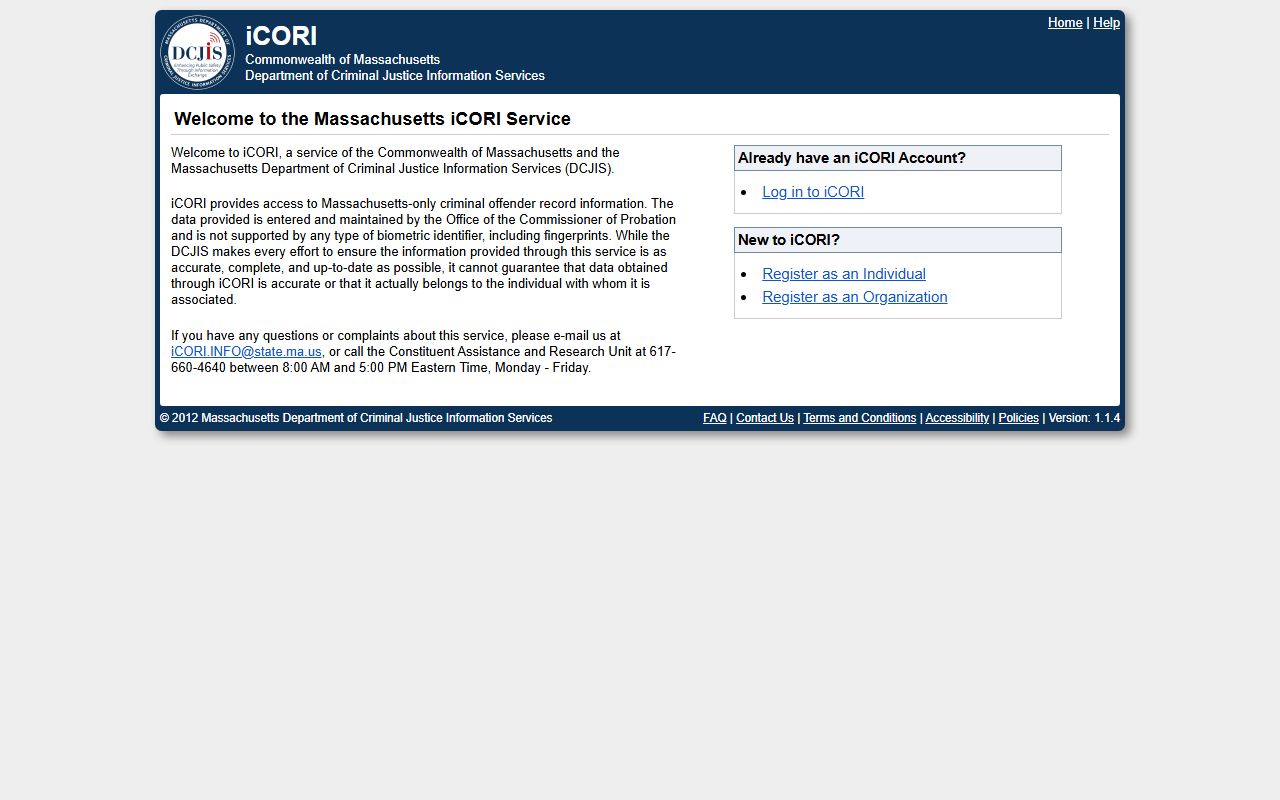
Registration is required before you can submit any CORI request through the iCORI system.
To search criminal records in Massachusetts, you typically need:
- Full legal name of the person
- Date of birth
- Social Security Number, if available
- Case number or docket number, if known
- Approximate dates of any court proceedings
The DCJIS and the iCORI System
The Department of Criminal Justice Information Services is the state agency that runs CORI. DCJIS provides criminal record checks to registered organizations, handles personal CORI requests for individuals, investigates cases of improper access to CORI, and offers legal help on CORI law matters. They do not offer walk-in service. Office hours are Monday through Friday, 8:00 AM to 6:00 PM. All requests go through their online system or by mail.
Individuals can request their own CORI at no cost once per year. After that, each request costs $25. If you cannot afford the fee, you can file an Affidavit of Indigency to have it waived. You can also request a self-audit, which shows you a list of all organizations that have checked your record in the past. Self-audits are free and available every 90 days. The DCJIS agency page has links to all their services and request forms.
The DCJIS homepage at mass.gov covers all services the agency provides for criminal record checks.
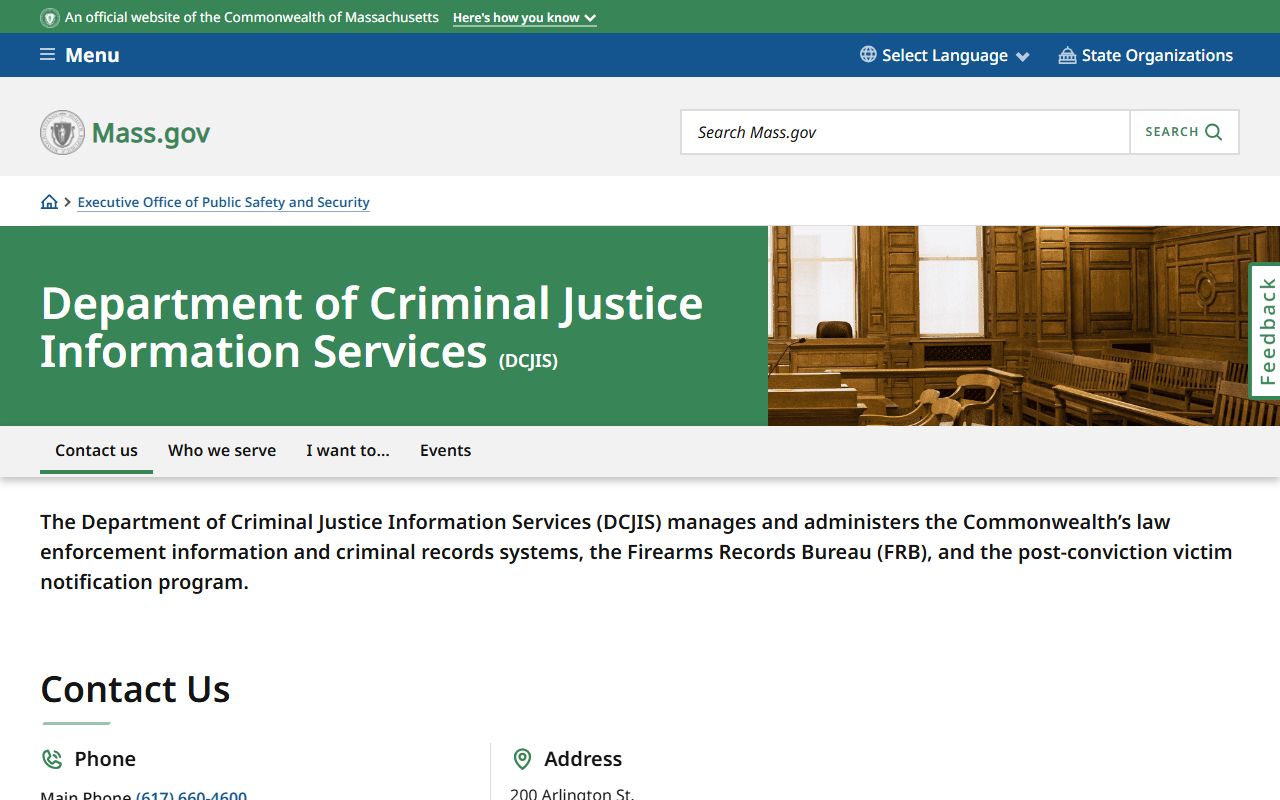
This page links to iCORI registration, personal CORI requests, and information on CORI law.
Court Records and Public Access in Massachusetts
Criminal court records in Massachusetts are created by the court system and stored at the courthouse where the case was heard. Each county has its own Superior Court and District Courts. The Superior Court handles serious felonies. District Courts handle misdemeanors, some felonies, and most routine criminal matters. Records at both levels are generally public, though sealed or expunged records are not accessible. The Massachusetts court system page lists all courts and their contact information statewide.
Court records include transcripts, dockets, affidavits, orders, case files, and sentencing information. Docket entries show every event in a case, from the initial filing to the final disposition. Bail conditions and court orders are also part of the file. For older cases, some records may only be available in physical form at the courthouse. The free public portal at mass.gov is a good starting point, but it does not show complete documents. You need to visit the court or send a written request to get certified copies or full case files.
The Massachusetts Trial Court case search page provides access to dockets and calendars across all court departments.
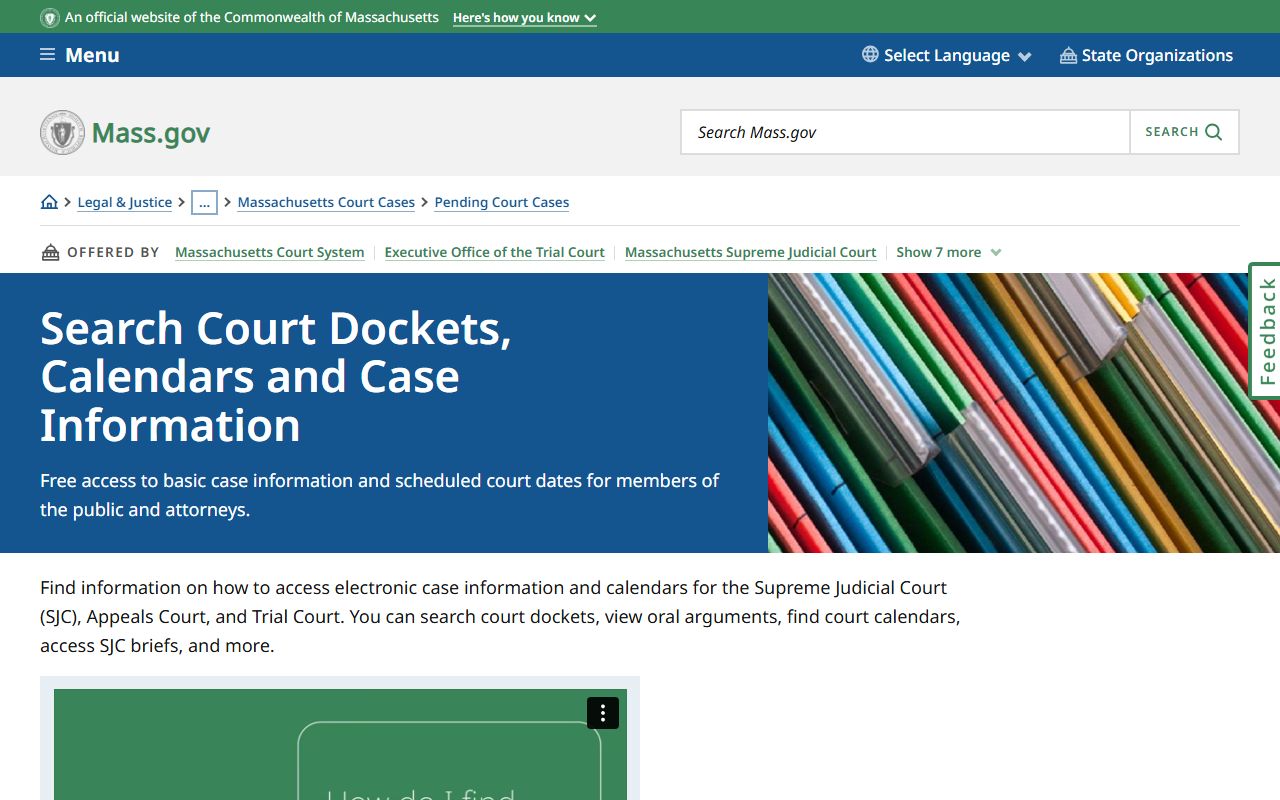
This portal covers Superior, District, Housing, Probate, and other court departments across all 14 counties.
Massachusetts Sex Offender Registry
The Sex Offender Registry Board, known as SORB, maintains a public list of sex offenders in Massachusetts. Only Level 2 (moderate risk) and Level 3 (high risk) offenders are listed publicly. Level 1 offenders are not on the public registry. You can search by name, city, town, zip code, or street address. The registry is free to use and available online at mass.gov/orgs/sex-offender-registry-board.
SORB records are separate from CORI. They come from a different part of state law and are managed by a different board. Sex offense convictions do appear in CORI as well, but SORB gives you a geographic search tool that CORI does not offer. If you are looking for registered sex offenders in a specific area of Massachusetts, the SORB portal is the right place to start.
The Massachusetts court system page at mass.gov has links to the courts in every county that handle criminal cases.
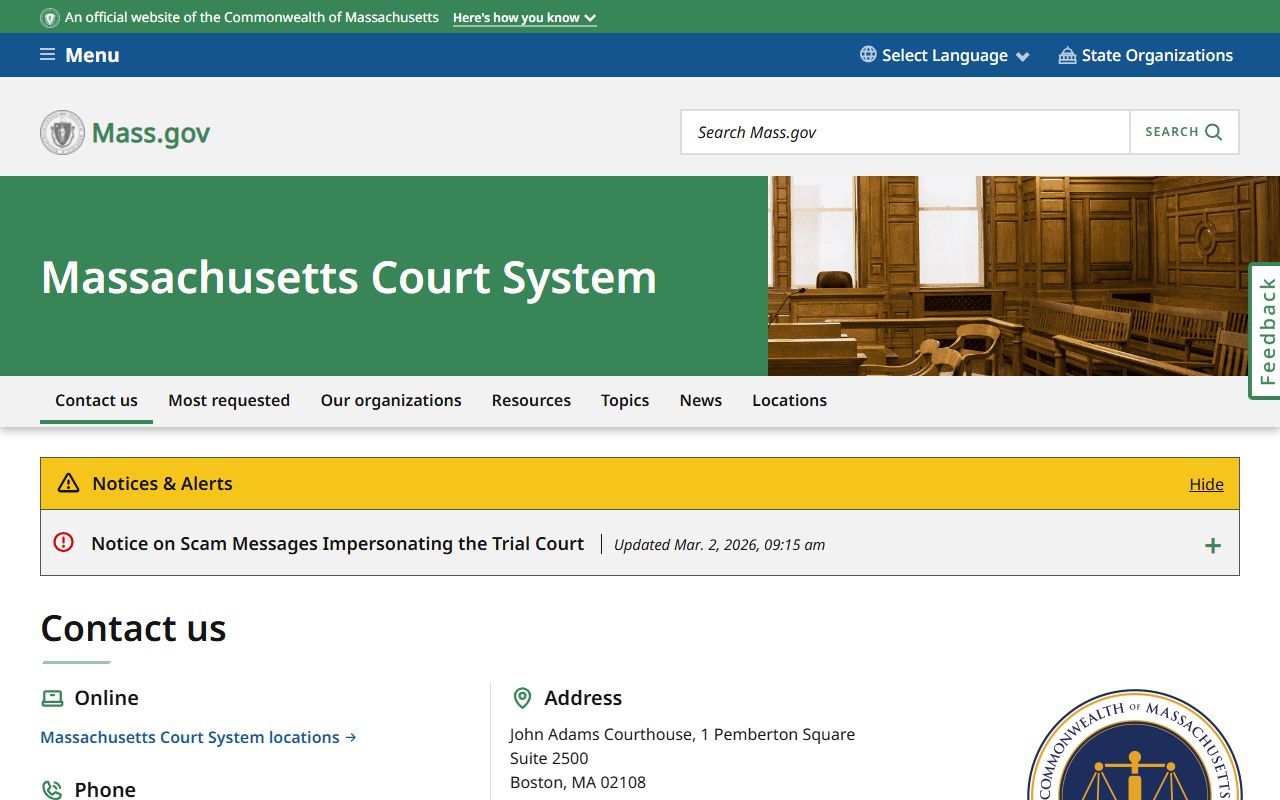
From this page you can find contact information for every court in Massachusetts, including phone numbers and hours.
Sealing and Expungement of Massachusetts Criminal Records
Sealing limits who can see a criminal record but does not delete it. Law enforcement and certain authorized agencies can still access sealed records. Administrative sealing under MGL c. 276, Section 100A requires a waiting period. For misdemeanor convictions, the wait is five years from disposition or release. For felony convictions, it is ten years. You cannot have any new convictions during the wait. Applications go through the Commissioner of Probation at 1 Ashburton Place in Boston. Court-ordered sealing under MGL c. 276, Section 100C is available immediately for cases that ended in a not guilty finding, a dismissal, or a nolle prosequi. You petition the court, and the judge must find that sealing would serve substantial justice.
Expungement goes further. It completely destroys the record, making it inaccessible to everyone. Massachusetts law allows expungement in limited situations: cases of mistaken identity, offenses committed before age 21 (limited to one felony and three misdemeanors), marijuana possession under two ounces that has since been decriminalized, and cases that resulted from errors by law enforcement or court staff. The 2022 marijuana expungement provision under MGL c. 276, Section 100K expanded eligibility for cultivation, possession, and distribution cases. You file a Petition for Expungement with the Commissioner of Probation and submit it to the court where the case was heard. A judge decides whether expungement is in the best interests of justice.
The CORI law information page covers sealing and expungement rules in detail.
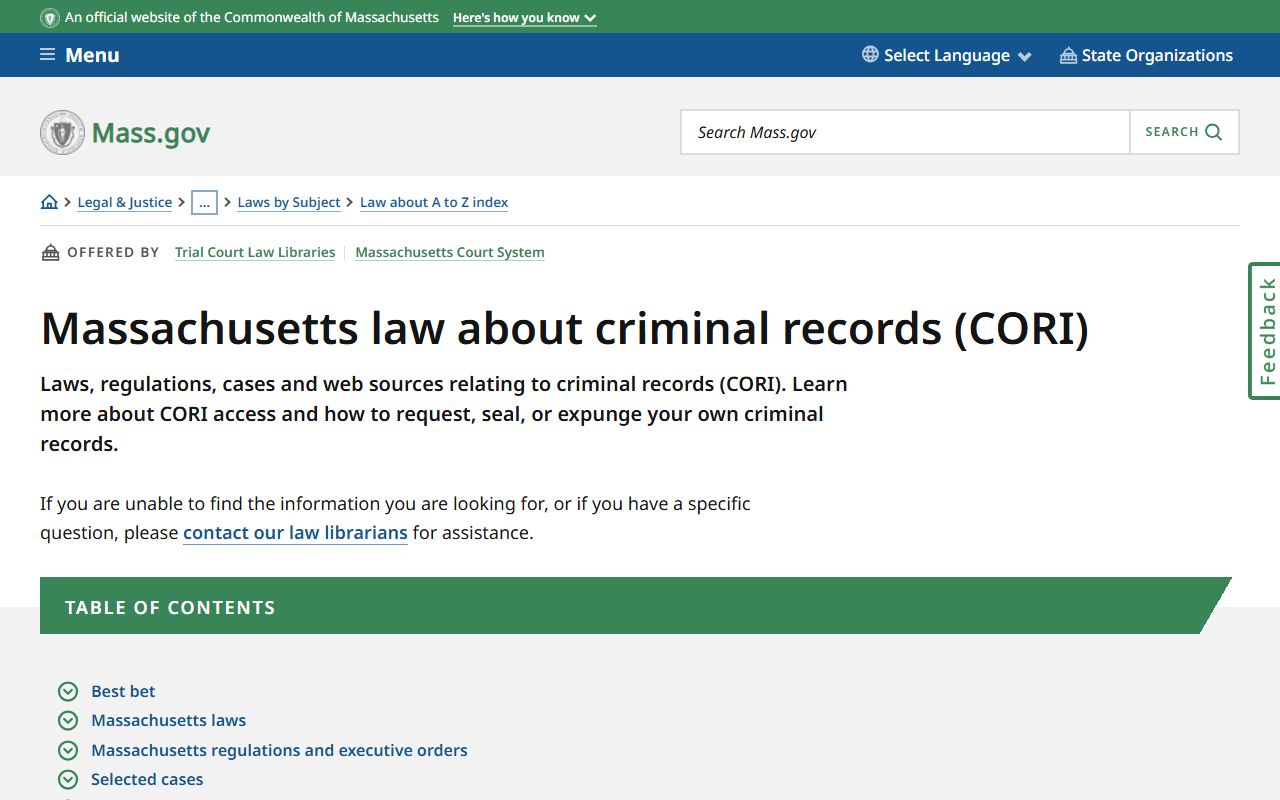
Greater Boston Legal Services also has a free guide on CORI rights at gbls.org that explains sealing, expungement, and how to correct errors in your record.
The CORI Reform Act changed a number of rules starting in 2012. MGL c. 151B, Section 4(9-1/2) prohibits most employers from asking about criminal history on initial written applications. This is Massachusetts' Ban the Box rule. The state also limits how far back misdemeanor inquiries can go under MGL c. 151B, Section 4(9). The Massachusetts law about criminal records page covers these provisions and links to the full text of relevant statutes. For a detailed guide on the reform act, the state also provides a downloadable implementation guide at mass.gov.
Browse Massachusetts Criminal Records by County
Each county in Massachusetts has its own Superior Court and District Courts that keep criminal case records. Pick a county below to find local court contact information, court hours, and how to request criminal records in that area.
View All 14 Massachusetts Counties
Criminal Records in Major Massachusetts Cities
Residents of major Massachusetts cities file cases at courts in their county. Pick a city below to find the specific courts, contact details, and how to look up criminal records in that city.